November 2026 · Two tracks

The Galileo
Hackathon

Build, Test, and Discover with SIDERIUS, Your AI Research IDE Powered by Agents.

An AI for Science Hackathon hosted by UC San Diego’s Halıcıoğlu Data Science Institute (HDSI) (opens in a new tab)

Track 02

Take on a challenge

Saturday, November 21, 2026

Fresh tasks. Experiments. Awards.

10:00 am–4:30 pm PST · Tasks revealed on the day

Registration closes in
Sun, Nov 15, 11:59 pm PST
–d ––h ––m
Track 1 starts in
Wed, Nov 4, 8:00 am PST
–d ––h ––m
Track 2 starts in
Sat, Nov 21, 10:00 am PST
–d ––h ––m

Scientific machine learning, across disciplines

Examples, not limits · Tasks revealed November 21

Physics
MAE
Materials Science
Biology
Chemistry
Medicine
Earth & Climate
Scientific Computing
Limited GPU & LLM API ResourcesFor Track 2 · Limited, first come, first served · Your own also welcome

Who can join

Track 1: individual · Track 2: teams of 1–3. Joining both tracks? Register for each.

Eligibility: affiliation with a U.S. university or research institution

All times: Pacific Standard Time (PST, UTC−8).

Machine learning for scientific questions

Bring tasks that use machine learning to investigate scientific questions. Physics, mechanical and aerospace engineering (MAE), materials science, biology, chemistry, medicine, Earth and climate science, and scientific computing are examples, not a complete list. Other scientific disciplines are welcome.

Your work stays yours. A Track 1 task becomes a Track 2 challenge only if its author agrees to make it public; it is then shared with participants and published under the MIT License. If the author keeps it private, only the Organizing and Scientific Committees see it for review; it is not shared with participants or published, and it remains eligible for Track 1 awards. Track 2 solutions belong to their authors, who decide whether to publish them; anything published uses the MIT License.

A scientific problem, made testable

Example: TIDMAD denoising

How can we reduce experimental noise while preserving a faint signal? TIDMAD provides time-series data from ABRACADABRA, an experiment searching for dark matter. Denoising means removing noise while retaining the signal of interest.

  1. 01 · Input

    Noisy measurements recorded over time, with injected test signals in the training and validation data.

  2. 02 · ML task

    Train a model to produce a denoised time series that preserves the injected signal.

  3. 03 · Evaluation

    Evaluate on separate validation data using TIDMAD’s denoising score, which measures signal relative to noise. Compare against the unprocessed data and baseline methods.

Illustrative example. Track 2 tasks will be revealed on challenge day.

Explore TIDMAD (opens in a new tab)

From questions to solutions

Choose your track

Track 1 · Design · Individual

Create a scientific challenge

Enter individually and create a task package: a scientific question with data and a clear way to evaluate results.

Rolling submissions & reviews

Join any time during the design track. Register by November 15, then submit by November 18. We review submissions as they arrive.

  • DefineScientific question + usable data
  • ValidateMetrics + validity checks + baseline
  • Submit for reviewRunnable package + instructions. Selected tasks enter Track 2, with the author's consent.
Science questionData + evaluationTask package
Build a challenge others can run, test, and learn from.

Opens November 4, 2026, 8:00 am PST · Submissions due November 18, 2026, 8:00 am PST

Track 2 · Challenge · Teams of 1–3

Take on a scientific task

Use SIDERIUS to solve tasks revealed on Saturday, November 21, 2026.

SIDERIUS challenges

From the organizers

Featured tasks from Track 1

Selected after review

  1. Choose your tasksAfter the warm-up, pick one or more scientific ML challenges.
  2. Run scientific ML experimentsUse SIDERIUS to develop and test machine learning solutions. Keep your results and run records.
  3. Submit your solution + reportSubmit your solution together with a report using the organizers’ template. Explain your approach, experiments, and findings. You may challenge multiple tasks; submit a separate solution and report for each.
Choose a challengeRun experimentsSolution + report
Turn experiments into a reproducible solution.

Competition: Saturday, November 21, 2026, 1:00–4:00 pm PST

One registration per team. Go solo or join with up to two teammates.

Registration for both tracks closes November 15, 2026, at 11:59 pm PST.

Join both tracks. Challenge someone else’s task.

Your team can enter multiple Track 2 tasks, but cannot challenge a task that any member helped design or submit.

How to participate

Individual or team?

Track 1: Individual entries only.
Track 2: Go solo or form a team of up to 3.

Eligibility: Open to students, faculty, and researchers affiliated with U.S. universities or research institutions.

Students and early-career researchers are especially encouraged to join. The Galileo Hackathon is a non-commercial academic event funded by UC San Diego.

Each participant must register with their institutional email address. Non-.edu institutional emails are welcome and subject to verification.

Online or in person

Join online or at UC San Diego. Exact venue to be announced. Lunch provided for in-person participants.

Compute & API

  • GPU, online or in person: each Track 2 team can request up to 2 hours of H100 GPU access with supporting CPU resources.
  • LLM API credits, in person only: each in-person team can request $30 in API credits.

Both are limited and allocated first come, first served by registration time.

Bring your own: You are welcome to use your own computing resources and LLM API keys, with no limits.

Saturday, November 21, 2026 · 10:00 am–4:30 pm PST (UTC−8)

Your challenge day

  1. 10:00–11:00 am

    Talk

    Ideas before experiments.

  2. 11:00 am–12:00 pm

    Warm-up

    Try a small SIDERIUS task.

  3. 12:00–1:00 pm

    Lunch

    Provided for in-person participants.

  4. 1:00–4:00 pm

    Competition

    Three hours to test your ideas.

  5. 4:00–4:30 pm

    Awards

    Winners announced.

Awards

$70 Amazon gift card per winner

Multiple entries welcome. One award per individual or team across both tracks. Each participant may receive at most one gift card.

Track 1 · Task Design

Outstanding Scientific Task ×1

Turn a meaningful science question into a reproducible ML task.

What judges look for

A meaningful scientific question translated into a clear, runnable ML task. Entries should include usable data, a baseline, and instructions that let others reproduce the task while preserving its scientific purpose.

Outstanding Evaluation Design ×1

Reward real scientific progress, not misleading scores.

What judges look for

An evaluation that distinguishes genuine scientific progress from a misleading high score. Entries should connect metrics to the scientific goal and include checks for invalid outputs, data leakage, or shortcuts.

Track 2 · Challenge

Outstanding Scientific Solution ×2

Deliver a validated improvement over your task’s baseline.

What judges look for

A scientifically valid solution with meaningful improvement over its task’s baseline. Judges will consider validation evidence, robustness, reproducibility, and clearly stated limitations alongside performance.

Outstanding Research & Insight ×1

Make thoughtful experiments lead to meaningful insights.

What judges look for

Thoughtful experiments that lead to well-supported insights. Show your hypothesis, what you tested, how the evidence shaped your next steps, and what you learned. A carefully explained negative result can be valuable.

Reward Hacking Discovery Award ×1

Expose the gap between a high score and good science.

What judges look for

Find where a better score stops meaning better science. Demonstrate a reproducible evaluation loophole, explain why the high-scoring result fails the scientific goal, and propose a way to detect or fix it.

Judging criteria & submission rules

Judges review the evidence behind each entry. Raw scores from different tasks are not compared directly.

Include reproducible code, relevant run records, and evidence supporting your claims. Scientific solutions must satisfy the task’s validity requirements. Reward-hacking entries must be clearly identified as loophole demonstrations and will not count as valid scientific solutions.

Test within the task’s permitted environment and data access. Do not modify the official evaluator, access unauthorized data, or interfere with other teams. Include a minimal reproduction and a comparison between the reported score and the actual scientific behavior.

Get familiar with SIDERIUS

Explore task configuration and your first workflow before the event.

Explore the tutorials

Partner event

From practice to a full research sprint

The Galileo Hackathon is your starting point: online, open to individuals, and focused on turning a scientific question into a testable task with SIDERIUS.

When you are ready for a longer, more in-depth event, join our partner event YaleSciHack, an in-person AI for Science hackathon at Yale University (New Haven), January 29 – February 1, 2027. Over four days, teams take real scientific questions to working results in two tracks: Academic Research and Research Tools.

Strong Galileo tasks may be invited as YaleSciHack challenges, so a task you design here can have a second life there.

Galileo · November 2026
Online · Practice and task design
YaleSciHack · Jan 29 – Feb 1, 2027
In person at Yale · Full research sprint

Learn about YaleSciHack (opens in a new tab)

YaleSciHackYaleSciHack (opens in a new tab)

Supported by

Organizing Committee

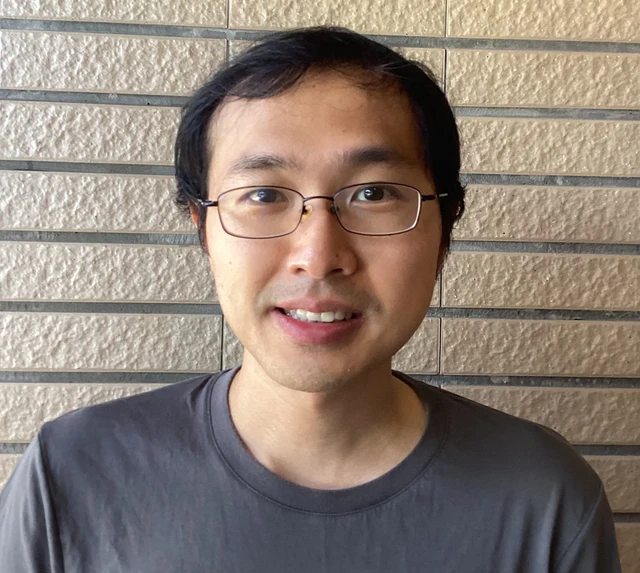
Aobo Li

Aobo Li (opens in a new tab)

Assistant Professor

UC San Diego
HDSI & Department of Physics

Neutrinos, dark matter, and detectors; ML simulation, signal analysis, and AI agents

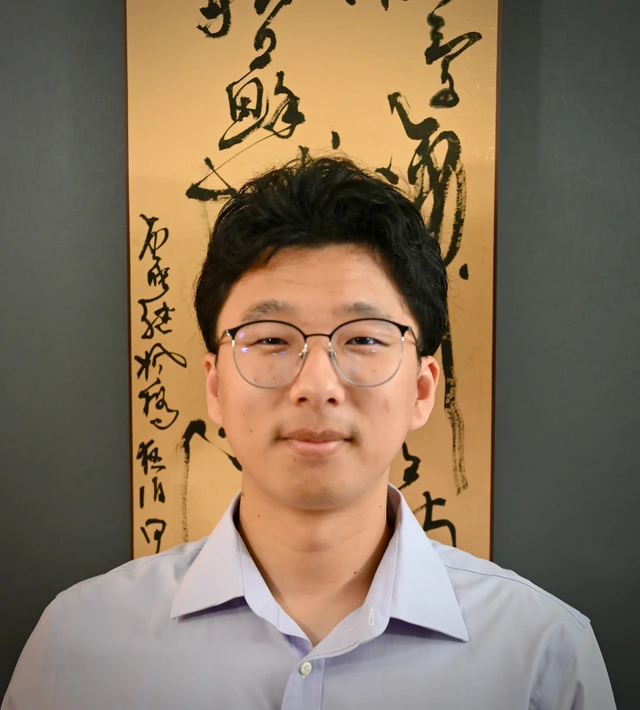
Yue Ma

Yue Ma (opens in a new tab)

Postdoctoral Researcher

UC San Diego
Halıcıoğlu Data Science Institute

Particle physics, scientific machine learning, and AI agents

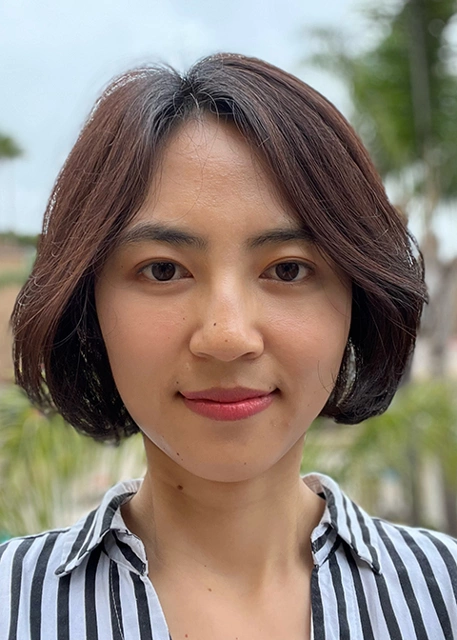
Tianhao Wang

Tianhao Wang (opens in a new tab)

Assistant Professor

UC San Diego
Halıcıoğlu Data Science Institute

High-dimensional statistics, deep learning theory, and optimization; LLM reliability

Scientific Committee

Hannah Carter

Hannah Carter (opens in a new tab)

Professor of Medicine

UC San Diego
Division of Genomics and Precision Medicine

Computational biology, cancer genomics, and machine learning
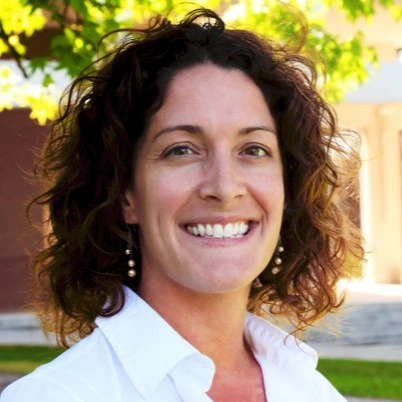
Rommie Amaro

Rommie Amaro (opens in a new tab)

Professor and Endowed Chair

UC San Diego
School of Biological Sciences

Computational biophysics, molecular simulations, and drug discovery

Luc Lenain

Luc Lenain (opens in a new tab)

Associate Researcher

UC San Diego
Scripps Institution of Oceanography

Air-sea interaction, ocean waves, turbulence, and remote sensing
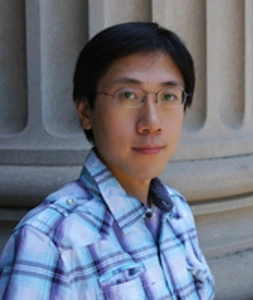
Jianming Bian

Jianming Bian (opens in a new tab)

Professor

UC Irvine
Department of Physics & Astronomy

Neutrino physics, detector development, and deep learning for particle reconstruction

Steven Dillmann

Steven Dillmann (opens in a new tab)

PhD Candidate

Stanford University
Institute for Computational and Mathematical Engineering

Foundation models, scientific agents, and evaluation of research workflows
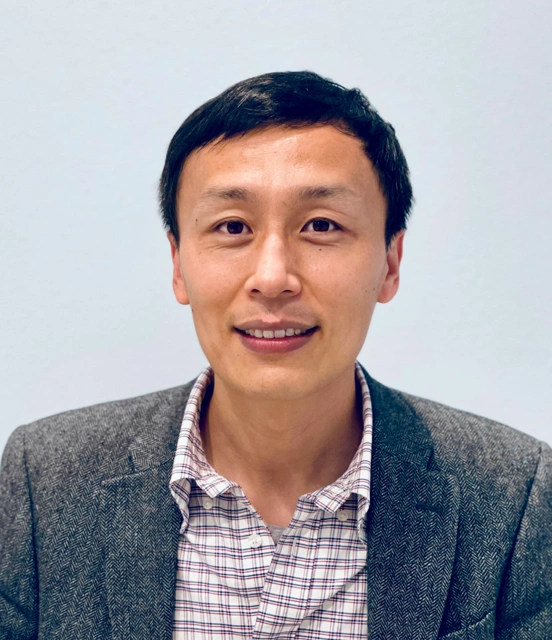
Penghui Cao

Penghui Cao (opens in a new tab)

Associate Professor

UC San Diego
Department of Mechanical and Aerospace Engineering

Materials in extreme environments, fusion energy, and machine learning for materials design

Wanlu Li

Wanlu Li (opens in a new tab)

Assistant Professor

UC San Diego
Department of Chemical and Nano Engineering

Computational chemistry, catalysis, and machine learning for materials design
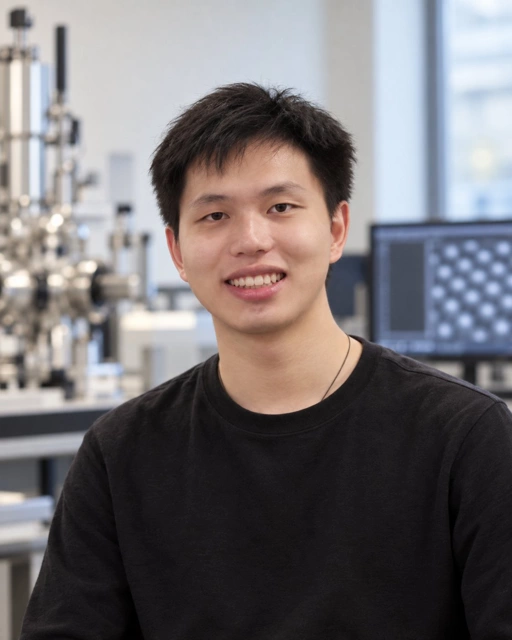
Yadi Cao

Yadi Cao (opens in a new tab)

Assistant Professor

University of Central Florida
Department of Computer Science

Machine learning for fluid dynamics and fusion plasmas; scientific agents
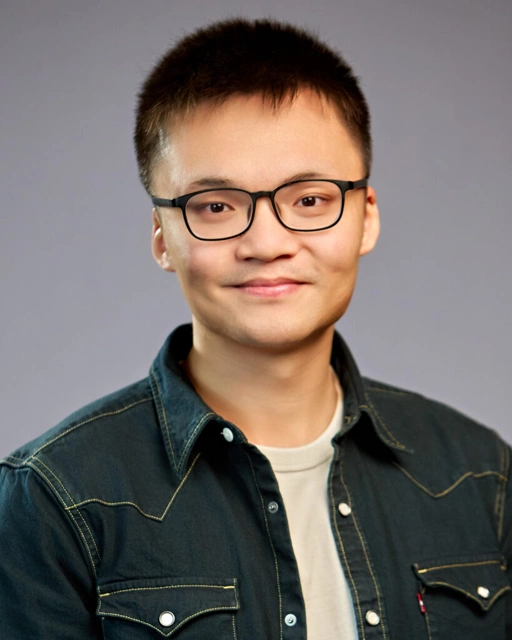
Hongbo Zhao

Hongbo Zhao (opens in a new tab)

Assistant Professor

UC San Diego
Physics & Chemistry and Biochemistry

Soft and active matter, biophysics, and data-driven discovery of physical laws

Zepeng Li

Zepeng Li (opens in a new tab)

Assistant Professor

University of Hawaiʻi at Mānoa
Department of Physics and Astronomy

Neutrino physics, optomechanical searches for new physics, and ML-driven detector development